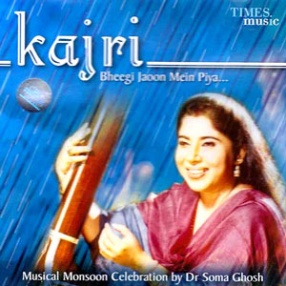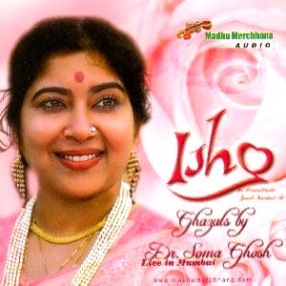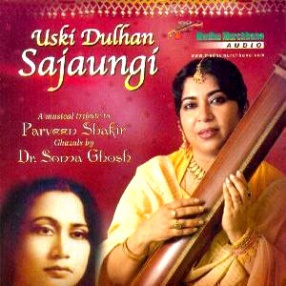
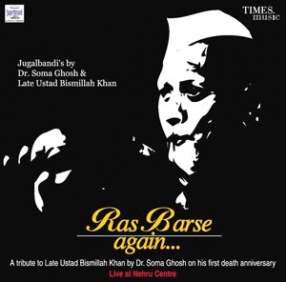
Soma Ghosh
Associated in her style with such giants like Pt. Omkarnath Thakur of Gwalior Gharana through his principle disciple Dr. Chitranjan Jyotishi, Dr. Soma started her training under the tutelage of her mother Smt. Archana Chakravarty at the age of thirteen. She completed her ‘Sangeet Prabhakar’ from Prayag Sangeet Samiti, Allahabad and has thus been groomed in the traditional Banaras Gharana under Pt. Narayan Chakravarty. Her style is a blend of playful expressions from Gwalior Gharana and the throwing technique of Senia Gharana.
‘A’ graded artiste of All India Radio, she has won critical acclaim not only for her fine melodious voice that touches the taarsaptak without a falsetto note but also for working out different tints and shades of underlying emotions through a sensuous stress on the words of Thumri.
Ustad Bismillah Khan
Ustad Bismillah Khan (March 21, 1916 – August 21, 2006) was an Indian shehnai maestro. He was the third classical musician to be awarded the Bharat Ratna (in 2001), the highest civilian honour in India and gained worldwide acclaim for playing the shehnai for more than eight decades.
Bismillah Khan was born in a bihari family at Bhirung Raut Ki Gali, in Dumraon, Bihar, as the second son of Paigambar Khan and Mitthan. He was named as Qamaruddin to rhyme with Shamsuddin, their first son. His grandfather, Rasool Baksh Khan uttered "Bismillah" (the basmala) after looking at the newborn, thus he was named Bismillah Khan.
His ancestors were court musicians and used to play in Naqqar khana in the princely states of Bhojpur, now in Bihar. His father was a shehnai player in the court of Maharaja Keshav Prasad Singh of Dumraon Estate, Bihar.
At the age of six, he moved to Varanasi.[1] He received his training under his uncle, the late Ali Baksh 'Vilayatu', a shehnai player attached to Varanasi's Vishwanath Temple.