
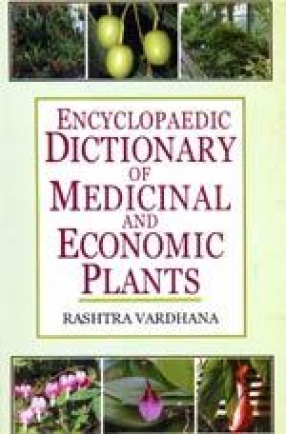
Encyclopaedic Dictionary of Medicinal and Economic Plants (In 2 Volumes)
Synopsis
The knowledge of medicinal and economical plants is perhaps as old as the human race itself and the history of medicine in India can be traced to the remote past. Through ages by accident, trial, experience and research. The earliest mention of the medicinal use of plants is found in the Rig Veda, perhaps the oldest repository of human knowledge, having been written between 4500 and 1600 B.C. In Atharvaveda too detailed descriptions of several medicinal plants were given definite properties of drugs obtained from plants. In Ayurveda and their uses have been given in some details. Susruta Samhita which was written not later than 1000 B.C. contains a comprehensive chapter on therapeutics and Charaka Samhita, written about the same period, gives a remarkable description of the Materia Medica as it was known to ancient Hindus. Later, during the Buddhist period, considerable progress was made and medicinal plants were cultivated under the direction of highly qualified specialists. Contacts with Greece and Rome, and later with Arabia and Persia, contributed to the enrichment of the Indian Materia Medica and a large number of vegetable and other products came into use for the treatment of diseases. During the centuries that have gone by, the Materia Medica of the indigenous systems of medicine has become extensive and heterogeneous. Out of about 2000 items recorded in Indian medical literature, less than 200 are of mineral and animal origin; the rest are derived from vegetable sources. The vegetable Materia Medica has been build up in the course of centuries and every region of India has contributed to its development. The practitioners of various Indian systems in different parts of India tried to utilize the locally growing plants as far as possible and accepted those which were found useful after trial for treatment of diseases.
Read more
124.20
111.78
$
138.00 $
Free delivery Wolrdwidе in 10-18 days
Ships in 1-2 days from New Delhi
Membership for 1 Year $35.00
Get it now and save 10%
Get it now and save 10%
BECOME A MEMBER




Bibliographic information