
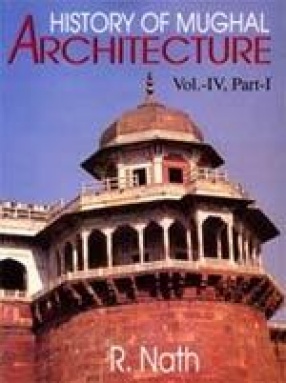
History of Mughal Architecture (Volume IV, Part I)
Synopsis
This is part 1 of Vol. IV of the multi-volume series: History of Mughal Architecture, three volumes of which have already been published. This volume deals with Shah Jehan’s age of ‘Architectural Aestheticism’ (1628-1658 A.D.) and its representative monuments, some of which mark the zenith of the style. This part has seven chapters. Sources of the history of this period have been enumerated in Chapters 1. The second chapter deals with ‘Shah Jehan and His Times: the Land, the People and the Culture’ and studies the literatures, arts and crafts which went into the making of the Mughal Civilization. Administrative buildings have been studied in Chapter 3, with such institutions as ‘durbar’ and ‘jharokha’, with which they were associated. The fourth chapter deals with residential buildings and also the regal life, which they ensured. The Ana Sagar Baradaris of Ajmer and Palatial complex of Bari have been studied in Chapters 5 and 6, with plans and photos, and in all necessary details, for the first time. Chapter 7 deals with mosques which have been stylistically classified to make a proper distinction between ‘Margiya’ and ‘Desiya’ forms. It is, thus, a cultural history of his age too. Contemporary Persian histories and accounts of foreign travelers have been utilized, and quoted wherever necessary for authentication. It is adequately illustrated by 86 colour and 380 b & w plates, 15 Persian Katbas and 160 figures of plans, sections, elevations, and sketches.
Read more
163.80
147.42
$
182.00 $
Free delivery Wolrdwidе in 10-18 days
Ships in 1-2 days from New Delhi
Membership for 1 Year $35.00
Get it now and save 10%
Get it now and save 10%
BECOME A MEMBER



Bibliographic information